Forestry mulching, lot clearing, and site prep from the Ravenel Bridge to McClellanville — free, itemized quotes from a local Lowcountry contractor.
Straight to a local crew — no call center.
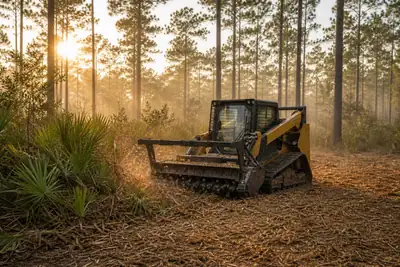
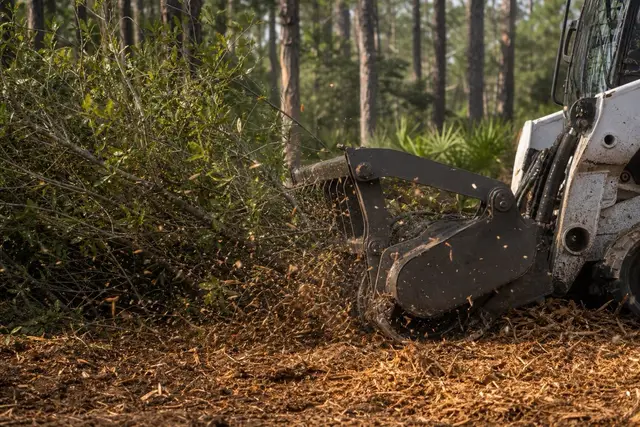
East Cooper Land Clearing connects Mount Pleasant and Lowcountry property owners with a local land clearing contractor who knows where the lines are — the Town's tree permit at 16 inches DBH, the SCDES critical-area boundary at the marsh edge, and the difference between Wando sand that carries a machine and Bohicket muck that swallows one. Forestry mulching handles most jobs without a burn pile, wax myrtle and Chinese tallow get cut so they stay cut, and every quote arrives free, written, and itemized.
Describe the land — a local land clearing contractor answers with written numbers.
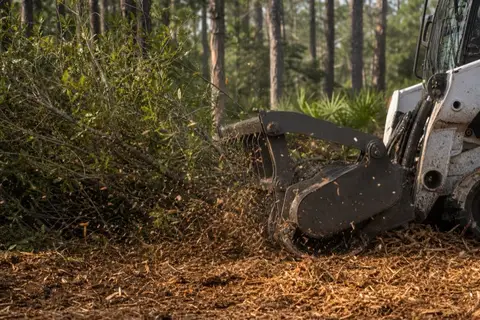
Single-pass mulching that grinds Lowcountry brush and small trees where they stand, leaving a ground layer instead of burn piles or haul-off loads.
See the service →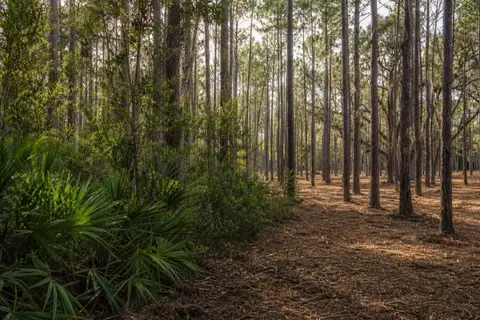
Selective removal of wax myrtle, palmetto, and vine understory beneath your canopy trees, opening the ground level without disturbing the soil.
See the service →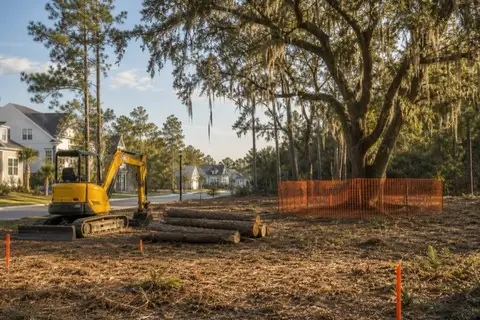
Full-lot clearing for new construction in Mount Pleasant, planned around the town's protected-tree ordinance before the first machine arrives.
See the service →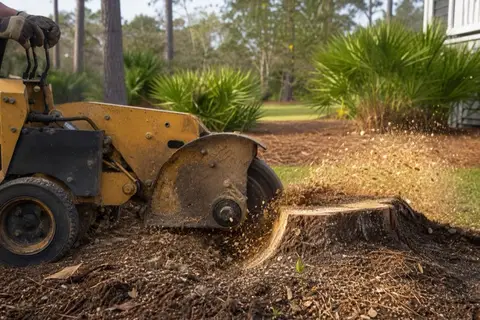
Grinding pine and hardwood stumps below grade across East Cooper lots, from single storm casualties to whole-parcel clearings.
See the service →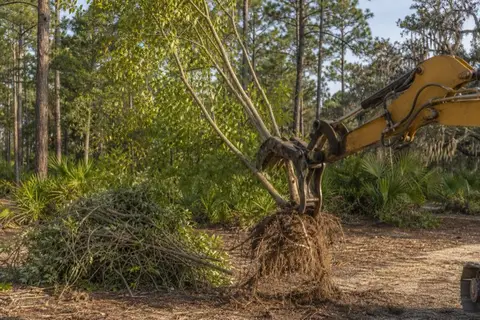
Targeted removal of Chinese tallow and other invasives colonizing Lowcountry parcels, with honest expectations about regrowth and repeat passes.
See the service →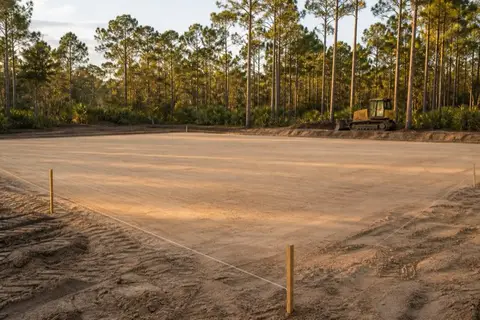
Rough and finish grading on cleared East Cooper ground, shaping sandy upland soil so 45 inches of annual rain moves away from the future slab.
See the service →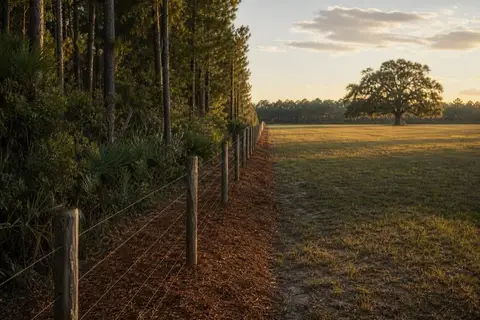
Reclaiming buried fence lines and surveyed boundaries from myrtle and vine growth, on everything from Hanahan infill lots to Huger acreage.
See the service →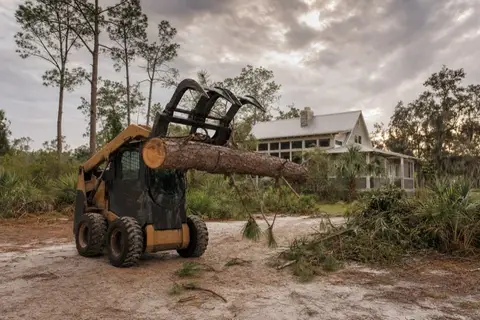
Clearing downed pines, hung limbs, and root balls after Lowcountry storms, in a region that still measures every hurricane against Hugo.
See the service →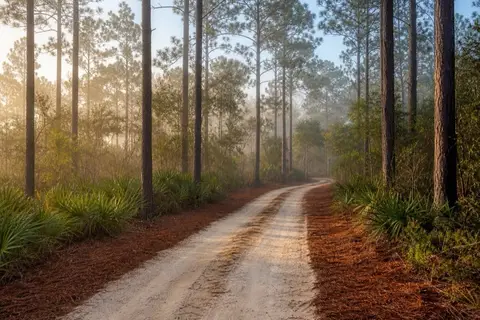
Cutting driveable corridors into wooded acreage from Awendaw to Huger to McClellanville, routed on the sandy ground that carries a vehicle.
See the service →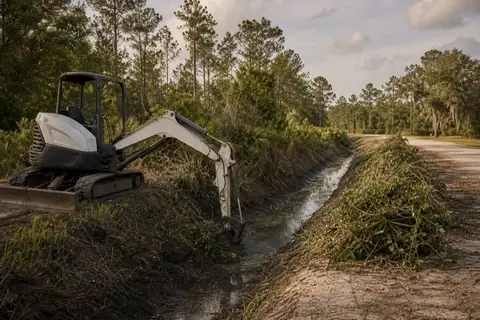
Reopening choked ditches and drainage lines on flat coastal parcels where a high water table gives rainfall nowhere to go on its own.
See the service →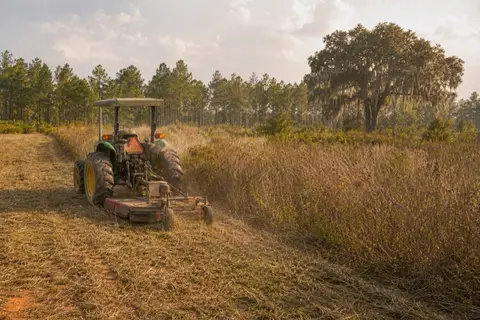
Rotary cutting for overgrown pasture and timber-tract regrowth along the Highway 17 corridor, from a few acres to a whole neglected parcel.
See the service →
Careful, permit-aware clearing landward of the critical-area line, opening marsh views without touching what the state protects below it.
See the service →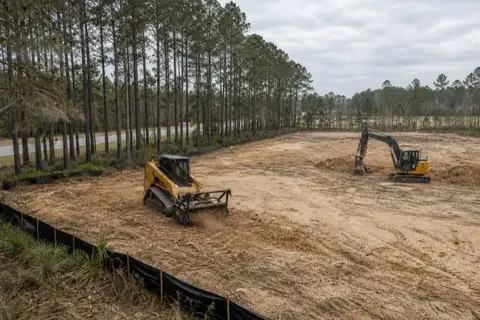
Clearing retail pads, subdivision phases, and commercial tracts along Highway 17 and Clements Ferry Road, sequenced with permits and earthwork.
See the service →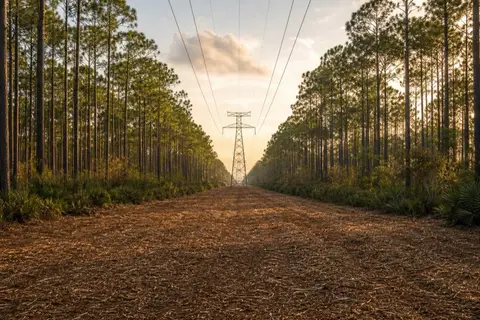
Mulched corridor clearing for utility easements, pipelines, and roadsides across a fast-building stretch of Charleston and Berkeley counties.
See the service →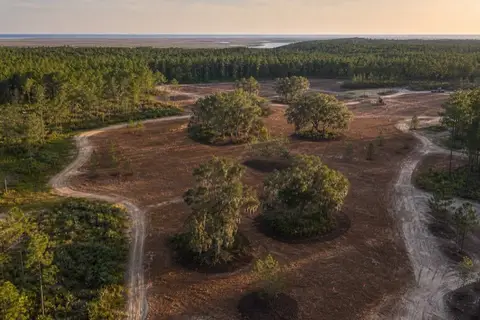
Recurring mulching and vegetation control on held land, keeping phased tracts clean, accessible, and survey-ready between build-outs.
See the service →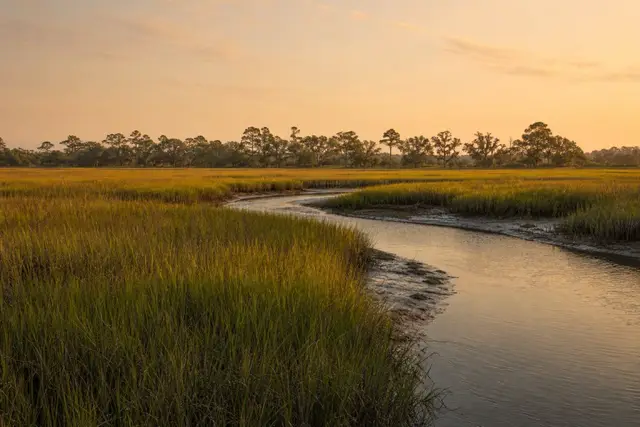
East of the Cooper, the ground writes the rules: protected live oaks over the old streets, spartina marsh behind the new ones, sandy uplands that carry machines and muck flats that don't. Clearing done well here starts by finding every line — tree, marsh, and property — and works confidently inside them.
Lowcountry forestry mulching typically runs about $300–$500 an acre for light brush, $500–$800 for medium growth, and $800–$1,400 or more where dense tallow, palmetto, or wet ground slow the machine — with tri-county minimum job fees commonly in the $1,200–$1,500 range. Full clearing with grubbing and grading prices higher, which is why every request through this site returns a free, written, itemized quote for your specific parcel.
Not past a certain size. Inside town limits, residential trees at 16 inches DBH and larger — 24 inches for pines — are protected, and removal needs a permit from the Zoning Administrator before work starts; historic trees of 24 inches and up also require an arborist's report. A contractor who works East Cooper regularly treats the permit as step one of the job, not an afterthought.
Up to the critical-area line, and not an inch past it without a permit. SCDES's Bureau of Coastal Management holds direct authority over tidelands and coastal waters in the eight coastal counties, so honest marsh-front work means locating that line first and keeping machines landward of the buffer. The upside: a properly cleared upland edge with the marsh view opened is exactly what these lots are worth.
Rarely, and mulching is why. South Carolina law requires notifying the Forestry Commission before any outdoor debris burn outside town limits, plus firebreaks, equipment on hand, and attendance to the end — and periodic burn bans can park the whole plan. A forestry mulcher turns the same vegetation into ground cover in one pass, no notification, no smoke drifting toward Highway 17.
Because the Lowcountry sits low. Sandy Wando soils carry a machine fine, but poorly drained ground — Johns Island is notorious for its water table — means mats, slower passes, and rutting risk that a contractor has to plan around. Wet-ground surcharges on a quote are physics, not padding, and the itemized format shows exactly where that cost lives.
The quote is free and obligates you to nothing. East Cooper Land Clearing is an independent local marketing site — your request is routed to a local land clearing contractor who walks the parcel, writes the itemized numbers, signs the contract, and runs the equipment. Everything after the introduction is directly between you and them.
 East Cooper