 East Cooper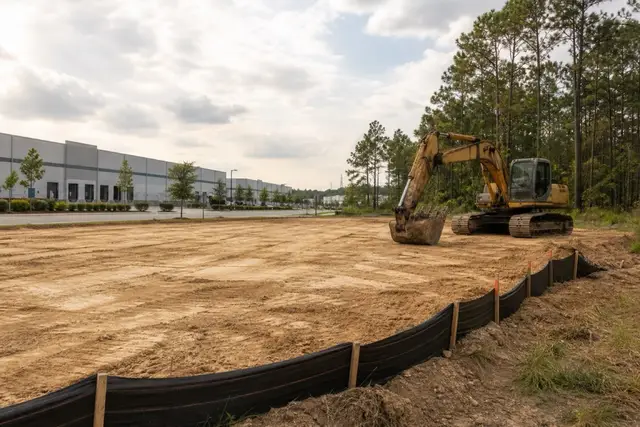

East Cooper Land Clearing pairs North Charleston property owners with a local land clearing contractor for forestry mulching, lot clearing, and site prep across the North Charleston area.
North Charleston is South Carolina's third-largest city at 114,852 residents, and it generates a different order of clearing demand than anywhere else in the service area: commercial. Retail pads, warehouse sites, laydown yards, and infill industrial parcels all start the same way — wooded or brush-covered ground converted to a workable site — and they run on schedules where a week of weather delay costs real money. Site clearing here is a line item on a construction timeline, not a weekend project.
The commercial checklist is specific. Perimeter trees to keep or lose get decided against the site plan, not in the field; grubbing depth matters because a pad goes on this ground next; erosion control has to be in place before disturbance on any site of size; and disposal becomes a logistics problem when the acreage produces hundreds of yards of material. Mulching in place shrinks that last line dramatically — ground-up vegetation stays as temporary stabilization instead of leaving in trucks — which is one reason it has taken over the first phase of Lowcountry site prep.
The same capability serves the city's overgrown vacant lots, fence-to-fence parcels that draw code attention until someone knocks them down. Commercial or lot-scale, scope it through this site: a free estimate arrives itemized by phase from a local contractor, so clearing, grubbing, and haul-off can drop straight into a project budget as separate numbers.
Site Prep That Answers to a Schedule
Commercial clearing runs on decisions made before the machine arrives. Perimeter trees to keep or lose get settled against the site plan rather than in the field; grubbing depth is specified because a foundation pad follows on the same ground; and erosion control has to be standing before disturbance begins on any site of size, a point worth confirming through Charleston County for parcels under its jurisdiction.
Disposal is the line that alarms budgets, because wooded acreage produces material by the hundreds of yards. Mulching in place shrinks it dramatically: the ground vegetation stays down as short-term surface protection rather than rolling out in truckloads, a large part of why the method now leads off most Lowcountry site preparation. The SC Forestry Commission maintains resources on handling woody material at exactly this scale.
From Site Walk to Line-Item Budget
On a commercial parcel, the walk-through happens with the site plan in hand. A local contractor confirms limits of disturbance, flags keeps along the perimeter, and matches clearing phases to the construction schedule, so the estimate drops into the project budget as separate numbers for clearing, grubbing, and haul-off.
The same walk works at lot scale for the city's overgrown vacant parcels, where the scope is simpler but the itemized format is just as useful to an owner answering a code notice. For a second view of North Charleston-area constraints, use Census QuickFacts for the region.