 East Cooper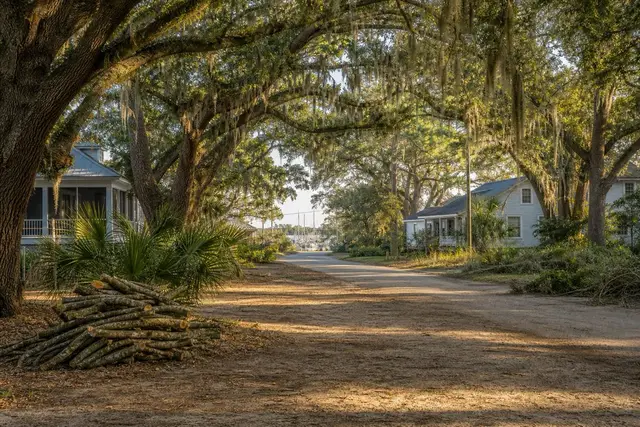
East Cooper Land Clearing pairs McClellanville property owners with a local land clearing contractor for forestry mulching, lot clearing, and site prep across the McClellanville area.
McClellanville is a working shrimping village of 605 people on the marsh edge, up 21.2 percent between the 2010 and 2020 censuses, and it carries the Lowcountry's institutional memory of what a hurricane can do. Hugo came ashore here in 1989 and flattened the town; the village rebuilt around its live oaks, and those trees are treated accordingly. Clearing work in McClellanville happens in the shade of that history — storm-damaged timber removed without sacrificing the canopy that survived, lots opened up while the oaks that define the streetscape stay untouched.
The calendar shapes the work as much as the history does. The Atlantic storm calendar occupies June 1 to November 30 with its crest near September 10, so the sensible rhythm here is preventive: dead and leaning trees taken down in spring, brush that would become windborne debris mulched before August, ditch lines cleared so the water that will eventually come again finds less to carry. After a blow, the same equipment turns to debris — downed pine and shredded underbrush ground in place rather than stacked on the roadside for months.
Where the ground turns to marsh, the rules turn with it. Everything on the water side of the state's critical-area line belongs to SCDES's Bureau of Coastal Management, and no clearing happens there without a permit — so honest work in this village stays landward of that line and knows exactly where it runs. To put a number on a McClellanville job, ask through this site for a free quote broken into its parts; a local contractor itemizes removal, grinding, and haul-off separately, storm season or off-season.
A Village That Clears on the Storm Calendar
Hugo's landfall in 1989 is still the reference point here, and it gives McClellanville clearing a preventive rhythm the rest of the county mostly lacks. Dead and leaning pines come down in spring, brush that would fly in a blow gets mulched before the season crests near September 10, and ditch lines get opened so the water that will come again has somewhere to go. The National Weather Service in Charleston publishes the outlooks and coastal hazard information owners in this village actually watch.
After a storm, the same machines turn to cleanup, grinding downed pine and shredded brush in place instead of leaving roadside piles for months. Through all of it, the live oaks that survived Hugo stay off the cut list; the village rebuilt around them, and clearing work here is expected to respect that. The International Society of Arboriculture offers plain guidance on protecting mature trees while heavy work happens nearby.
Walking a Marsh-Edge Lot Before Naming a Price
Every McClellanville quote begins with a boundary that has nothing to do with the deed: the state's critical-area line, past which the marsh answers to coastal regulators and clearing is off the table without a permit. A local contractor identifies where that line runs on the parcel, keeps all planned work landward of it, and notes anything close enough to deserve a second opinion. SCDNR's coastal resources are a reasonable starting point for owners who want to understand the marsh side of their own property.
Landward of the line, the walk sorts the lot into removals, grinding, and haul-off, and the free estimate prices each one separately, whether it is peak season or the middle of February.