 East Cooper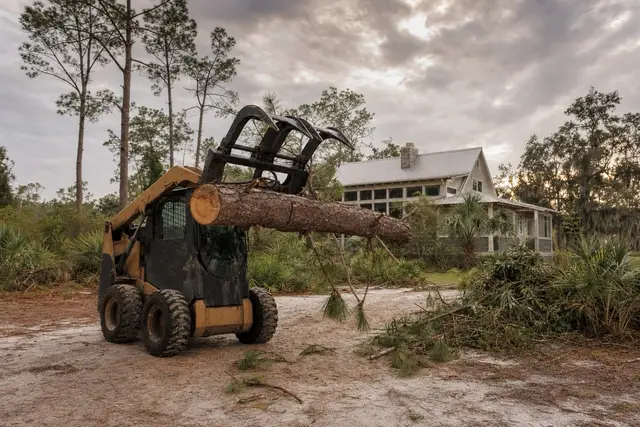

East Cooper Land Clearing pairs Mount Pleasant property owners with a local land clearing contractor for storm & hurricane debris cleanup in Mount Pleasant and the East Cooper communities around it.
Hurricane season runs June 1 through November 30. The National Hurricane Center puts its statistical peak around September 10, with most activity landing between mid-August and mid-October. For the East Cooper towns strung along Highway 17, that is a five-month window every year in which a wooded lot can become a debris field overnight.
This coast carries the memory to prove it. Hugo came ashore in 1989 and leveled McClellanville and the forest around it, and the shrimping village that rebuilt afterward remains the local reference point for what a major storm does to standing timber. The practical inheritance of that history is a healthy respect for leaning pines — the tree a storm bends but does not drop is often the most dangerous thing left on the property.
Post-storm work is its own discipline. Hung limbs are freed under control rather than pulled blind, leaners are felled away from structures, and downed trunks are bucked and moved. Upturned root balls, which can drop back into their holes with real force, are handled by people who know that behavior. The debris itself is mulched on site or hauled — which matters in the weeks after a storm, when burn bans are common and the SC Forestry Commission's notification line is the least of anyone's problems.
The quieter half of this service happens before the season does. Thinning storm-vulnerable pines, clearing deadwood, and opening overgrown lots in spring means less on the ground in September. It is work best scheduled in the calm months, when contractors are not triaging a whole county at once.
After a storm, or ahead of the season, East Cooper Land Clearing connects you with a local contractor. The assessment covers what is down, what is hanging, and what should come down next. A free, itemized quote arrives before any saw starts.
Reading a damaged tree before touching it
Storm-damaged trees fail in patterns, and knowing them is the safety margin. A trunk with a vertical crack is storing energy; a limb hung in the canopy can hold for weeks and then drop without wind; a pine heaved at the base has already lost the root plate on one side. ISA homeowner guidance on storm-damaged trees is worth ten minutes of any owner's time, if only to learn which situations should never meet a homeowner's chainsaw.
Not everything damaged is doomed. A young pine bent by wind will often straighten over a season, while a mature oak that lost one stem of a split fork is a judgment call about the wood that remains. For borderline keepers, an assessment by an ISA arborist before removal protects trees that four decades of shade cannot replace.
Getting ahead of the season
The cheapest storm work happens in April. NWS Charleston publishes seasonal outlooks and preparedness material every spring, and the property-level translation is simple: thin the storm-prone pines, drop the standing deadwood, and clear the overgrown corners while contractors have open calendars. What is not on the ground in September cannot land on a roof.
After a declared storm, know the split between public and private cleanup. Charleston County debris operations collect from public rights-of-way on published schedules, but trees down across a private yard, drive, or roof are the owner's to handle. That split is why private clearing capacity gets scarce in the exact weeks demand peaks.