 East Cooper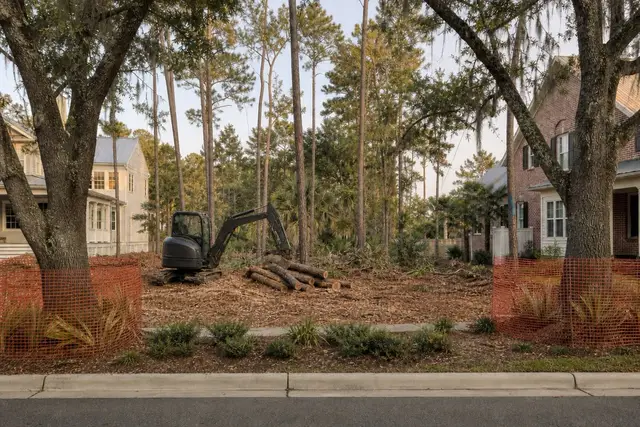
East Cooper Land Clearing pairs Daniel Island property owners with a local land clearing contractor for forestry mulching, lot clearing, and site prep across the Daniel Island area.
Daniel Island is a roughly 4,000-acre master-planned island community between the Cooper and Wando rivers, part of the City of Charleston but sitting in Berkeley County; a 2017 Census Bureau estimate put the island at roughly 12,600 residents, and the buildout has continued since. The raw-land phase is largely over here — what remains is the finish work of a planned community: the last infill lots cleared for construction, wooded buffers between neighborhoods thinned back to their intended depth, park and trail edges maintained before they close in.
Planned-community clearing is a discipline of its own. The island was designed around preserved trees and green corridors, so the job is rarely take everything — it is take the understory and the invaders while the specimen hardwoods stay. That means low-ground-pressure mulching that does not scar root zones, clean margins where a lot meets a protected buffer, and an early check of what community design standards and city tree rules require before anything with a blade arrives.
For riverfront parcels there is one more line to respect: where the yard ends and the state's jurisdiction over the marsh begins, because nothing gets cleared beyond the critical-area line without a coastal permit. A free itemized quote requested here covers the whole picture — a local contractor walks the lot, flags what is protected, and returns a price with each task on its own line before any commitment is made.
Finish-Work Clearing in a Planned Community
Daniel Island was laid out around preserved trees and green corridors, so clearing here is rarely about taking everything. The standing assignment is the understory: invasive shrubs and volunteer growth come out, the specimen hardwoods stay, and the margin where a private lot meets a protected buffer is left clean and defensible. Root zones get particular care, since a machine that compacts the ground under a preserved oak can do slow damage nobody sees for years; the International Society of Arboriculture explains why the soil around a tree matters as much as the trunk.
Before anything with a blade arrives, the community's design standards and the city's tree rules both deserve a check, because a planned community documents its intentions and expects work to follow them. Clemson's Home and Garden Information Center is a practical reference for telling invasive understory from the native growth worth keeping.
The Walk That Happens Before the Number
A Daniel Island quote starts with a lot walk that flags three things: what is protected, where the buffer margin actually runs, and, on riverfront parcels, where the state's critical-area jurisdiction begins at the marsh, a boundary explained in SCDNR's coastal materials. Nothing beyond that last line gets cleared without a coastal permit, so it is identified first rather than discovered later.
With those boundaries flagged, the estimate comes back itemized: understory mulching, individual removals, and debris handling each on its own line, sized for a finished neighborhood where the work has to end tidy.