 East Cooper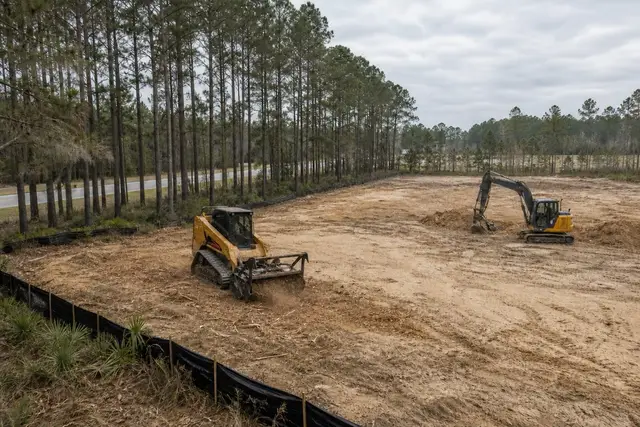

East Cooper Land Clearing pairs Mount Pleasant property owners with a local land clearing contractor for commercial site & pad clearing in Mount Pleasant and the East Cooper communities around it.
Commercial clearing in the East Cooper market concentrates along two spines. One is the Highway 17 corridor through Mount Pleasant; the other is Clements Ferry Road on the Cainhoy peninsula, where the road itself is being widened to four lanes to carry the growth already approved behind it. Retail pads, medical and office sites, and subdivision phases all start the same way — wooded tract in, buildable ground out.
The scale of what is coming is documented rather than speculative. The Cainhoy Plantation tract alone spans roughly 9,000 acres approved for up to 18,000 homes and a potential 45,000 residents, and Mount Pleasant's own 33.8 percent growth over the last census decade keeps commercial services chasing rooftops. For anyone holding or developing commercial land east of the Cooper, clearing capacity is a scheduling question, not a someday question.
Regulation scales with the projects. Inside Mount Pleasant, clearing-and-grading permits and the tree ordinance apply to commercial tracts as they do to residential lots, with protected and historic trees inventoried before the plan is approved; on parcels near tidal waters, the SCDES critical-area line adds a state-level boundary the site plan must respect. Contractors who work this market treat the permit set as the first mobilization item.
The work itself runs from forestry mulching of understory for survey and geotech access, through full removal and grubbing of the building footprint, to root raking and rough grading that hands the pad to the sitework contractor. On upland Wando sands the sequence moves quickly. Near the low ground, phasing follows the weather.
East Cooper Land Clearing routes commercial inquiries to a contractor equipped for tract-scale work. Plans are examined before pricing, not after. The quote comes back free and itemized by phase — clearing, grubbing, haul-off, and grading each on its own line.
Due-diligence clearing before the closing
On wooded commercial tracts, a light clearing pass is often the first investment a buyer makes, sometimes before the purchase closes. Narrow mulched corridors let surveyors run lines, geotech rigs reach boring locations, and wetland consultants walk transects through ground that was impassable the week before. The buyer prices the tract on evidence instead of aerial photos, which in a market growing as fast as the census numbers show East Cooper to be, is cheap insurance against expensive surprises under the canopy.
Stormwater controls from the first cut
Commercial-scale land disturbance triggers erosion and sediment control obligations from the day the first machine works, not the day the building permit issues. The approved plan typically specifies the sequence:
- Perimeter silt fence and inlet protection installed before clearing begins
- A stabilized construction entrance so haul traffic does not track sand onto the public road
- Ground opened in phases, with disturbed areas stabilized rather than left bare
- Controls inspected and maintained through the life of the project
Requirements layer by jurisdiction, with Charleston County stormwater rules applying broadly and the Town of Mount Pleasant adding its own clearing-and-grading process inside town limits. Contractors working this market treat the control plan as part of the clearing scope, not an accessory to it.