 East Cooper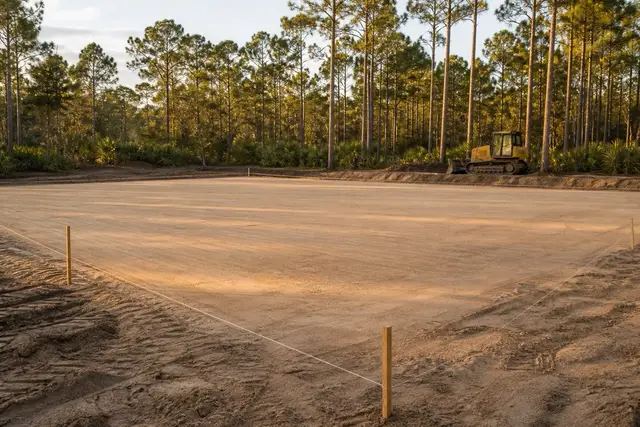
East Cooper Land Clearing pairs Mount Pleasant property owners with a local land clearing contractor for grading & site preparation in Mount Pleasant and the East Cooper communities around it.
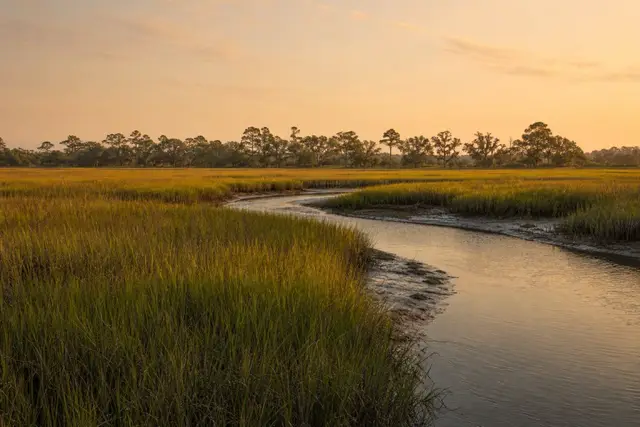
The Charleston County soil survey tells the two-part story of East Cooper ground. Upland lots sit on Wando loamy fine sand — gently sloped, excessively drained, the kind of soil that carries equipment and takes a grade cleanly. Toward the water, that sand gives way to Bohicket soils: very poorly drained marine muck on the tidal flats, flooded daily by the tides, where no pad belongs and no machine should wander. Good site prep begins with knowing which of the two you are standing on.
Rain is the design constraint on the upland side. Charleston County averages 45.30 inches a year, and on flat coastal parcels water that is not deliberately directed simply stays. Grading a building site here means establishing a pad above the surrounding grade, pitching the surface so runoff sheds away from the future foundation, and cutting swales that give the water an actual destination rather than a low corner of the lot.
The service picks up where clearing ends. Root raking pulls the debris the mulcher leaves behind, cutting and filling brings the site to rough grade, and the pad is compacted and finish-graded to the elevations on the site plan. On Wando sand the material moves easily and drains as fast as it is shaped, which is one of the quiet advantages of building on the East Cooper side of the harbor.
In Mount Pleasant, grading work on a wooded lot travels together with the town's clearing-and-grading permit — the same instrument that governs protected-tree removal. The earthwork plan and the tree plan move through approval as one package rather than two. Sequencing that paperwork before mobilization is the difference between a smooth week and an idle machine.
Share your site plan or a rough sketch of the build. East Cooper Land Clearing will connect you with a grading contractor working the Mount Pleasant area. The quote for the dirt work comes back free and itemized, staged to match your builder's schedule.
Designing for water before the slab exists
On flat coastal ground, drainage is a design decision made in the dirt phase, not a landscaping afterthought. Much of East Cooper sits in mapped flood zones, and Charleston County floodplain resources are the starting point for how high a pad needs to sit. From there the questions are mechanical: where does roof and driveway runoff go, which direction do the swales fall, and what happens at the property line when a tropical downpour tracked by NWS Charleston parks over the neighborhood for six hours.
Sand is an ally here. Open swales cut in Wando material carry water and soak it in at the same time, which is why simple graded channels solve on this side of the harbor what would take buried pipe in clay country. The grading plan just has to give every drop a downhill path that ends somewhere legitimate.
Holding bare sand until the landscaping arrives
The vulnerable window is the gap between finish grade and established grass. Bare Wando sand moves in both wind and rain, and a pad that waits unprotected through a wet month can lose its shaped edges before the builder ever pours. Standard practice closes that window: silt fence on the low sides, a stabilized construction entrance, and temporary seeding on any ground that will sit exposed. Clemson HGIC keeps region-specific guidance on establishing grass in sandy coastal soil, and the fall seeding window is a Lowcountry gift worth using.