 East Cooper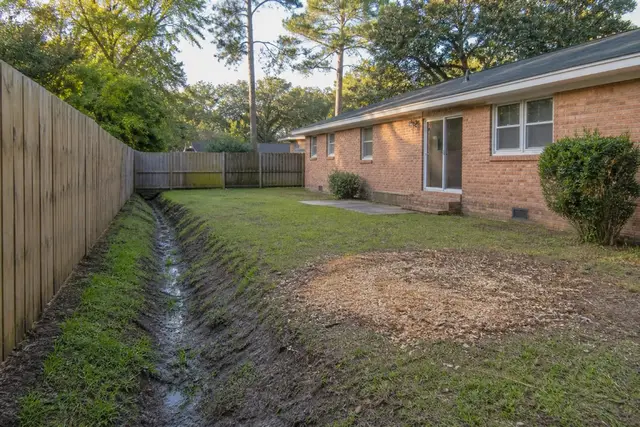
East Cooper Land Clearing pairs Hanahan property owners with a local land clearing contractor for forestry mulching, lot clearing, and site prep across the Hanahan area.
Hanahan is the built-out case: 20,325 residents in a Berkeley County suburb where almost every parcel already has a house on it. Nobody here is clearing raw acreage. The work is the small, stubborn kind instead — a back property line swallowed by fifteen years of untended growth, a drainage easement that no longer drains, a side yard reclaimed for a shed or a pad. Small lots do not make small thickets; they just press them up against the fence.
Water gives these jobs their urgency. Charleston County's average of 45.30 inches of rain a year has to leave every one of these neighborhoods through ditch lines and easements, and a swale full of privet and wax myrtle holds water against yards on both sides of the fence. Clemson's horticulturists note wax myrtle suckers into colonies and reaches fifteen to twenty feet, which is how a drainage line disappears in a handful of seasons — and why cutting it out with a mulcher, roots disturbed as little as possible, beats digging the whole channel into a mud bog.
Fence-line work in a built neighborhood also means working clean beside the neighbors: no windrows of debris, no torn turf, mulch left in place or hauled by agreement. It costs nothing to ask what a job like that runs — the form on this site brings back a free quote from a local contractor with the cutting, grinding, and any haul-off each priced on its own line.
When the Real Problem Is Water
Hanahan's clearing jobs are small in footprint and urgent in function, because most of them stand between a neighborhood and its drainage. The 45.30 inches of rain Charleston County averages in a year, tracked by the National Weather Service in Charleston, has to drain off these blocks somehow, and a swale packed with privet and myrtle dams that water against every yard it touches.
Clemson's horticulturists put mature wax myrtle at fifteen to twenty feet and describe how it spreads by suckering, which is how a drainage line vanishes in a handful of seasons. Mulching it out with roots left in place beats excavation here, since digging up a wet swale tends to turn it into a mud bog that drains worse than the thicket did.
Quoting a Backyard Job Beside the Neighbors
The walk-through on a built-out block is mostly about the approach: which gate or side yard the machine enters through, what turf gets protection along the route, and what the folks on the shared fence need to hear before a machine starts at eight in the morning.
The free quote then lists cutting, grinding, and any haul-off as separate lines sized to a small lot, so an owner reclaiming one fence line is not priced as if they were clearing an acre. ISA guides to trees near homes is the supporting source for this Hanahan planning detail.