 East Cooper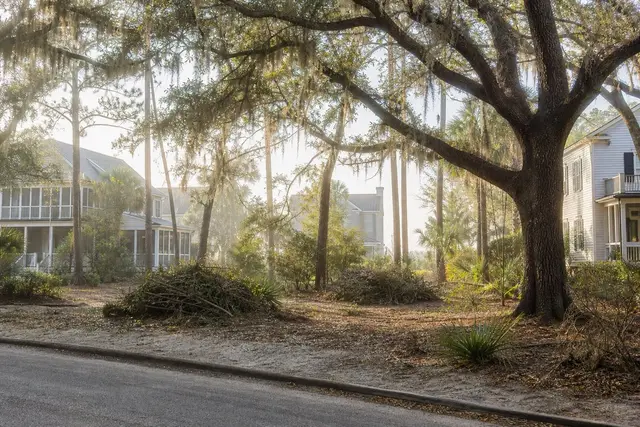
East Cooper Land Clearing pairs Sullivan's Island property owners with a local land clearing contractor for forestry mulching, lot clearing, and site prep across the Sullivan's Island area.
Sullivan's Island holds 1,891 residents on some of the most expensive residential ground in the United States, and that changes the arithmetic of clearing entirely. Nobody here is grinding down acreage; the work is surgical — a sightline opened, a fence line freed of vine, a building envelope defined on a lot where the land under each tree is worth more than most houses elsewhere. When square footage costs this much, the value is in what stays standing as much as in what comes down.
The island's accreted beachfront land carries a genuine maritime forest, and much of it is protected — which makes Sullivan's Island the wrong place for anyone who treats clearing as a blunt instrument. The honest sequence runs permit check first, saw second: confirming what the town's rules allow on a given parcel before a single stem is cut, then working selectively around the live oaks and cedars that give these streets their character. Wax myrtle complicates the maintenance side; Clemson's horticulturists note it runs to fifteen or twenty feet and suckers into colonies, so a buffer trimmed once tends to become a buffer trimmed on a schedule.
For work this constrained, a vague per-acre figure is useless. The quote form on this site returns a free, line-by-line price from a local contractor instead — selective removal, mulching, and debris handling each itemized, so a small-footprint job on high-stakes ground is priced like one.
Cutting Selectively Under a Protected Canopy
On a parcel where the accreted land carries genuine maritime forest, the first tool is a rule check, not a saw. Much of this growth is protected, so the honest order of work is to confirm what the town allows on the specific lot, then plan cuts around the live oaks and cedars that anchor the streetscape. Guidance from the International Society of Arboriculture is useful here, because the difference between thinning near a mature oak and damaging one often comes down to technique.
The understory is where most of the actual cutting happens. Vine loads come off keeper trees carefully, wax myrtle gets knocked back to open a sightline, and the building envelope is defined by removing the least material that accomplishes it. Clemson's horticultural fact sheets describe how readily coastal shrubs sucker back into colonies, which is why a Sullivan's Island buffer is tended on a schedule rather than conquered once.
What a Stem-by-Stem Estimate Looks Like
Pricing surgical work takes a walk with flagging tape. A local contractor moves through the lot with the owner, marking keeps and cuts individually, noting where a machine can stand without compacting root zones, and confirming which removals deserve a closer look under town rules before they are promised.
The estimate that follows lists selective removal, mulching, and debris handling as separate lines. On ground this valuable, that structure lets an owner see exactly what each opened sightline or freed fence line involves, and trim the scope instead of guessing at a lump sum. Sullivan's Island-area project assumptions should be checked against SCDNR coastal habitat resources.