 East Cooper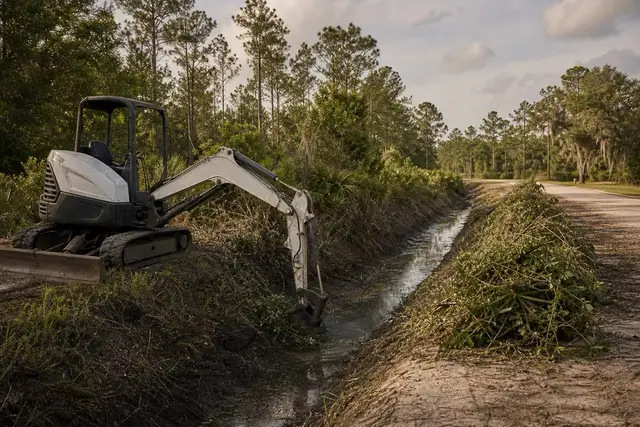
East Cooper Land Clearing pairs Mount Pleasant property owners with a local land clearing contractor for drainage & ditch line clearing in Mount Pleasant and the East Cooper communities around it.
Flat land, heavy rain, and a shallow water table make drainage the defining maintenance problem of Lowcountry parcels. Charleston County takes 45.30 inches of rain in an average year. On coastal ground the water table sits close enough to the surface that the soil cannot simply absorb a wet week — the water has to be carried off, and the ditches dug generations ago to do that carrying only work when they are open.
Johns Island is the cautionary tale local contractors cite. Its notoriously high water table is a documented working constraint — ground where saturated soil ruts under a machine and a mistimed job leaves equipment mired. The same physics applies in gentler form across the East Cooper flats. That is why ditch work is scheduled around dry windows and run with tracked, low-pressure machines rather than forced through the mud on a calendar date.
The work itself is unglamorous and effective. Mulching clears the wax myrtle and vine growth that has closed over the ditch line, debris and sediment dams come out of the channel, and a continuous fall is re-established so water moves instead of standing. A ditch that disappears into a thicket almost always turns out to be blocked in more places than the one visible from the yard.
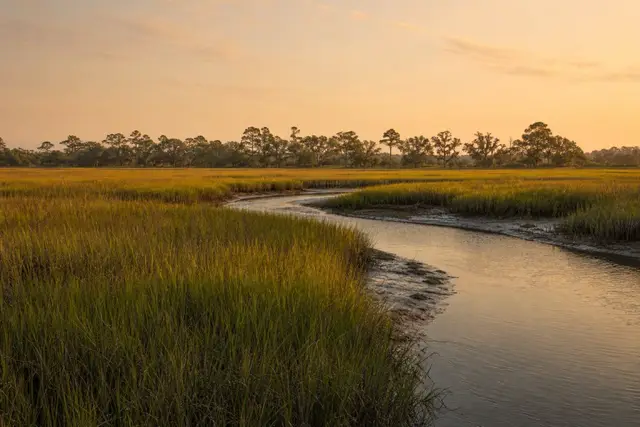
One boundary is worth stating plainly. This service covers upland drainage — yard ditches, roadside lines, field laterals. Anything at the marsh edge or below the critical-area line falls under SCDES Bureau of Coastal Management jurisdiction and is a permitting conversation, not a mulching job; that distinction is covered honestly on the marsh buffer page.
Describe where the water stands and East Cooper Land Clearing will connect you with a local contractor. The line gets traced end to end before anything is priced. The quote for reopening it comes back free and itemized.
The water table sets the calendar
Ditch work obeys a seasonal rhythm that no schedule can override. Through the cool months the coastal water table rides near the surface, and a channel cut or cleaned in January refills from the ground itself before any rain falls. The workable windows come when evaporation outruns rainfall, typically stretches of late spring and early summer between frontal systems, and NWS Charleston forecast tools are how those dry stretches get picked. A contractor who proposes ditch work for the wettest week of February is proposing to leave ruts.
Keeping a reopened ditch from closing again
A ditch stays open only as long as its banks stay in the right vegetation. Grass on the banks mows easily and holds the soil; myrtle and willow on the banks become next decade's blockage. After the reopening pass, converting the banks to a maintainable grass cover, with Clemson HGIC guidance on which species hold wet Lowcountry ground, is what separates a lasting fix from a five-year loop.
There is a public-health angle too. Water that moves does not raise mosquitoes; water trapped behind a brush dam does. Charleston County runs an active mosquito-control program, and a property's own open ditches are the homeowner's contribution to the same fight.