 East Cooper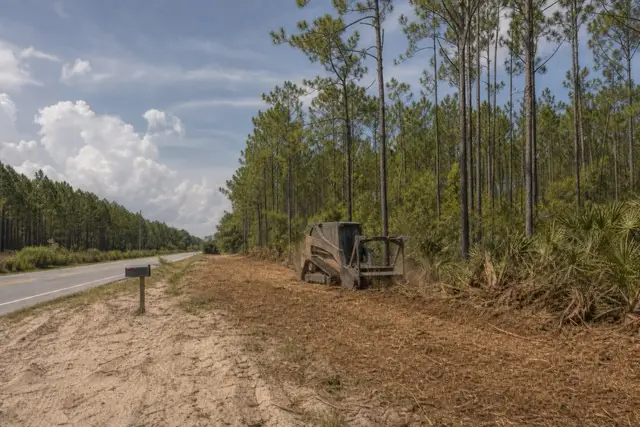
East Cooper Land Clearing pairs Awendaw property owners with a local land clearing contractor for forestry mulching, lot clearing, and site prep across the Awendaw area.
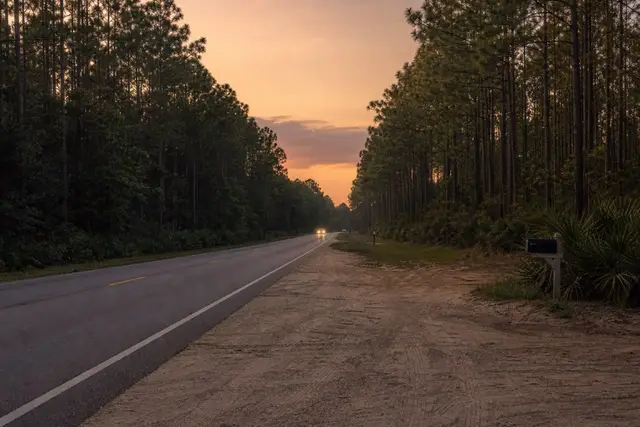
Awendaw is where the Highway 17 corridor stops being suburban. The town of 1,399 sits 28 miles northeast of Charleston, wrapped almost entirely by the roughly 259,000 acres of Francis Marion National Forest, and the parcels here look like it — wooded acreage under loblolly pine with palmetto and vine underbrush thickening every year an owner leaves it alone. This is the part of the service area where jobs are quoted in acres, not corners: a grown-over homesite reclaimed, an access drive cut back to a building spot, hunting lanes opened through regrowth.
One boundary matters more than any fence: the national forest line. Private inholdings and road-frontage tracts clear; federal land does not, and a survey-accurate reading of where one ends and the other begins belongs in the plan before a machine unloads. Burning the debris is the other regulatory tripwire — South Carolina law requires notifying the Forestry Commission before any outdoor debris burn, with a firebreak and suppression equipment on hand — which is a large part of why mulching in place has become the default answer out here. Ground stems become ground cover, and there is nothing left to burn, notify about, or haul.
This stretch of 17 also carries the sweetgrass basket stands that Gullah-Geechee artisans have kept for generations, a living heritage the corridor rightly protects. The land clearing conversation stays on private timber and brush, where it belongs. Start with the short form on this site: a free estimate comes back itemized by the acre and the task, from a contractor who works this end of the highway.
Working Beside a National Forest Line
Nearly everything around Awendaw backs up to federal timber, and the boundary between private acreage and the Francis Marion is the one line no machine can blur. A survey-accurate reading of where the parcel ends belongs in the plan before mobilization, because a tract edge that looks like ordinary pine regrowth may not be the owner's to cut.
Debris is the second constraint. Before burning it outdoors, state law calls for notice to the Forestry Commission along with a firebreak and suppression standing by, and burn windows can close when conditions turn dry. Mulching in place became the Awendaw default largely because it deletes that whole problem: ground stems stay on the tract as cover, and nothing is left to burn or haul. Habitat guidance from SCDNR is also worth a look for owners cutting lanes with wildlife in mind.
How Wooded Acreage Gets Scoped and Quoted
An acreage quote starts on foot, not from an aerial photo. A local contractor covers the tract with the owner, flags the forest boundary and any wet-bottom stretches, and splits the work into named tasks: the homesite reclaim, the drive, the lanes through regrowth.
Each task then gets its own acreage and its own line, so the free estimate comes back as a menu rather than a single number. Owners around here routinely start with the piece that unlocks the land, usually the access drive, and schedule the rest across seasons. The outside reference for Awendaw-area conditions is Clemson HGIC land and landscape fact sheets.