 East Cooper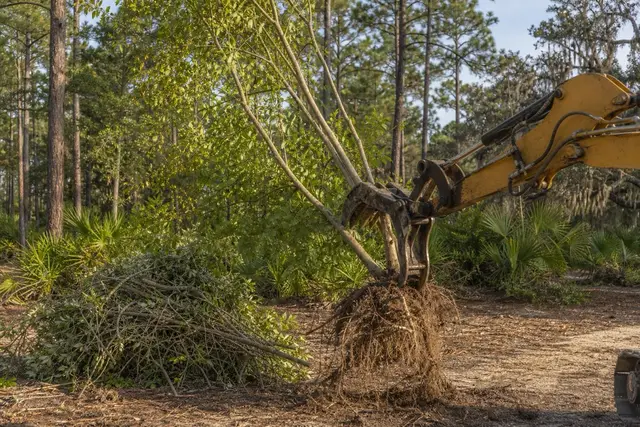
East Cooper Land Clearing pairs Mount Pleasant property owners with a local land clearing contractor for chinese tallow & invasive removal in Mount Pleasant and the East Cooper communities around it.
Chinese tallow — the popcorn tree — has been in South Carolina longer than the United States has existed. Introduced in 1776, it is now naturalized across the entire SC Coastal Zone, and Clemson's Home and Garden Information Center and the Southeast Exotic Pest Plant Council list it as a Significant Threat for the coastal plain. Along the Highway 17 corridor it behaves exactly like one, seeding into ditches, field edges, and any lot left open.
The speed is what surprises landowners. Invasive-plant literature documents tallow dominating open habitat within roughly a decade of arrival: birds spread the waxy seeds, the saplings outgrow everything native around them, and a parcel that was pasture ten years ago becomes a tallow stand with little else in it. On recently cleared or disturbed ground in Awendaw, Wando, or the Cainhoy peninsula, tallow is usually first through the door.
Removal means more than cutting, because a felled tallow resprouts from the stump with enthusiasm. Effective work combines mulching or felling the standing trees with grinding or treating the stumps, then returning for the seedling flush that the soil's seed bank will send up in the following seasons. Anyone who promises a single-visit cure for an established tallow stand is promising more than the biology allows.
Not every aggressive plant on a Lowcountry lot is an invader. Wax myrtle, for instance, is a fast-suckering native that gets cleared for space, not for ecology. A good clearing plan distinguishes the two rather than flattening everything green, and that distinction is part of what the site walk is for.
East Cooper Land Clearing forwards your parcel details to a local contractor who identifies what is actually growing there. The quote comes back free and itemized. Any recommended follow-up passes are priced as their own line rather than folded into a vague total.
Tallow is not the only intruder
The popcorn tree gets the headlines, but a Lowcountry parcel left open collects a whole roster of aggressive imports. Chinese privet packs ditch lines and fence rows into hedges nothing native can penetrate. Japanese climbing fern drapes itself over young pines, and cogongrass, which state natural-resource agencies track as a top-priority threat, turns openings into a flammable monoculture. Clemson HGIC keeps identification pages for all of them, and the site walk sorts out which ones a given parcel is actually hosting.
They share a strategy: disturbed, sunlit ground. That is why removal plans pair the cutting with a quick answer for the opened space, whether that is mulch cover, seeded grass, or replanted natives, so the cleared patch is occupied before the next wave of wind-blown and bird-dropped seed arrives.
Cutting on the seed calendar
Timing does real work in invasive removal. Felling tallow before its autumn seed set keeps thousands of waxy white seeds out of the soil bank, and cutting privet before it fruits denies the birds their delivery route. Winter work has the added advantage of sparing dormant natives while the evergreen invaders stay visible and easy to target.
The last step is deciding what grows there instead. Fast, sturdy natives such as yaupon holly, beautyberry, and, yes, wax myrtle will hold ground that tallow would otherwise reclaim, and ISA guidance on tree selection helps match replacements to the site. A parcel that gets replanted defends itself; one left as open sand invites the whole cycle to restart.